Close
Device Support Tool application shown on a MacBook
Device Support Tool

Empowering Support Agents with Cloud-Based Remote Servicing

The Challenge

Lexmark's support process was stuck in a game of "technical telephone." Agents relied on customers to relay device details — customers who often weren't near the printer or lacked technical knowledge. Internally, agents were limited to slow, cluttered Power BI dashboards with minimal actionable data. This friction led to long call times, high technician dispatch costs, and a frustrated customer base.

The Solution

The Device Servicing Tool (DST) is a purpose-built, cloud-based command center. It allows Technical Support Agents to diagnose and fix devices remotely in real-time, often without the customer even needing to be on the line.

The Bottom Line: Projected $10M annual savings in call center efficiency and reduced technician dispatches.

Jump to Design

The Full Story

Identifying the need

I designed and conducted a 3 day workshop with 29 leaders from across the business, focused on identifying high value problems that would encourage enterprise customers moving to our cloud offerings.

During this time I broke leaders into small groups to participate in a series of activities that would allow them to collaborate and share ideas before bringing the best ideas to the large group for voting and prioritization.

After 3 rounds of voting and discussions, the ability to solve customer issues remotely, in real time without needing a technician was voted as the highest value problem to solve.
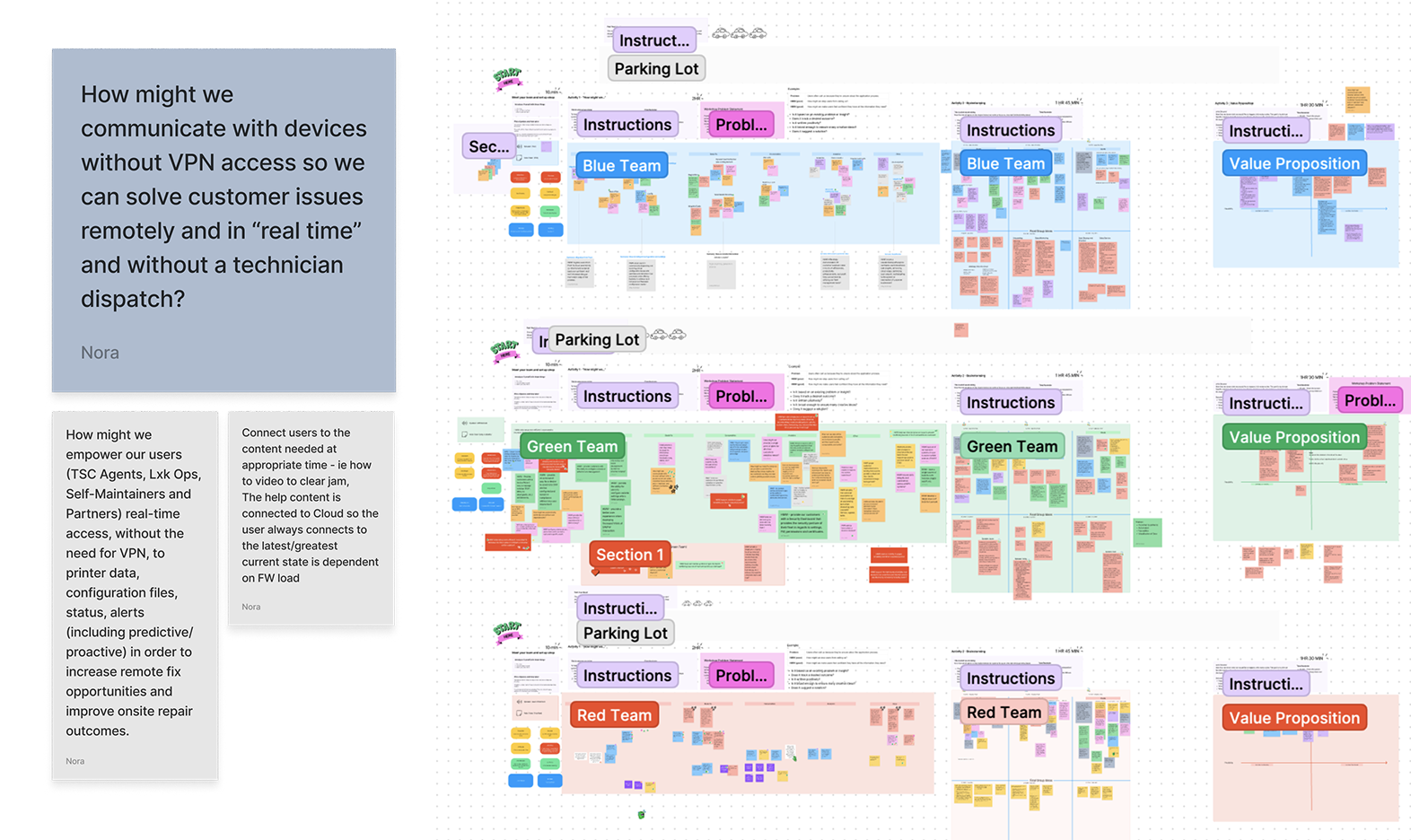
This project is valued at 10 Million in service cost savings

Figjam workshop board with sticky notes and voting

Figjam workshop board

Discovery Research

Identifying the pain points

I knew I couldn't design this from an "ivory tower." To understand the baggage of past failed solutions, I started a multi-step investigation:

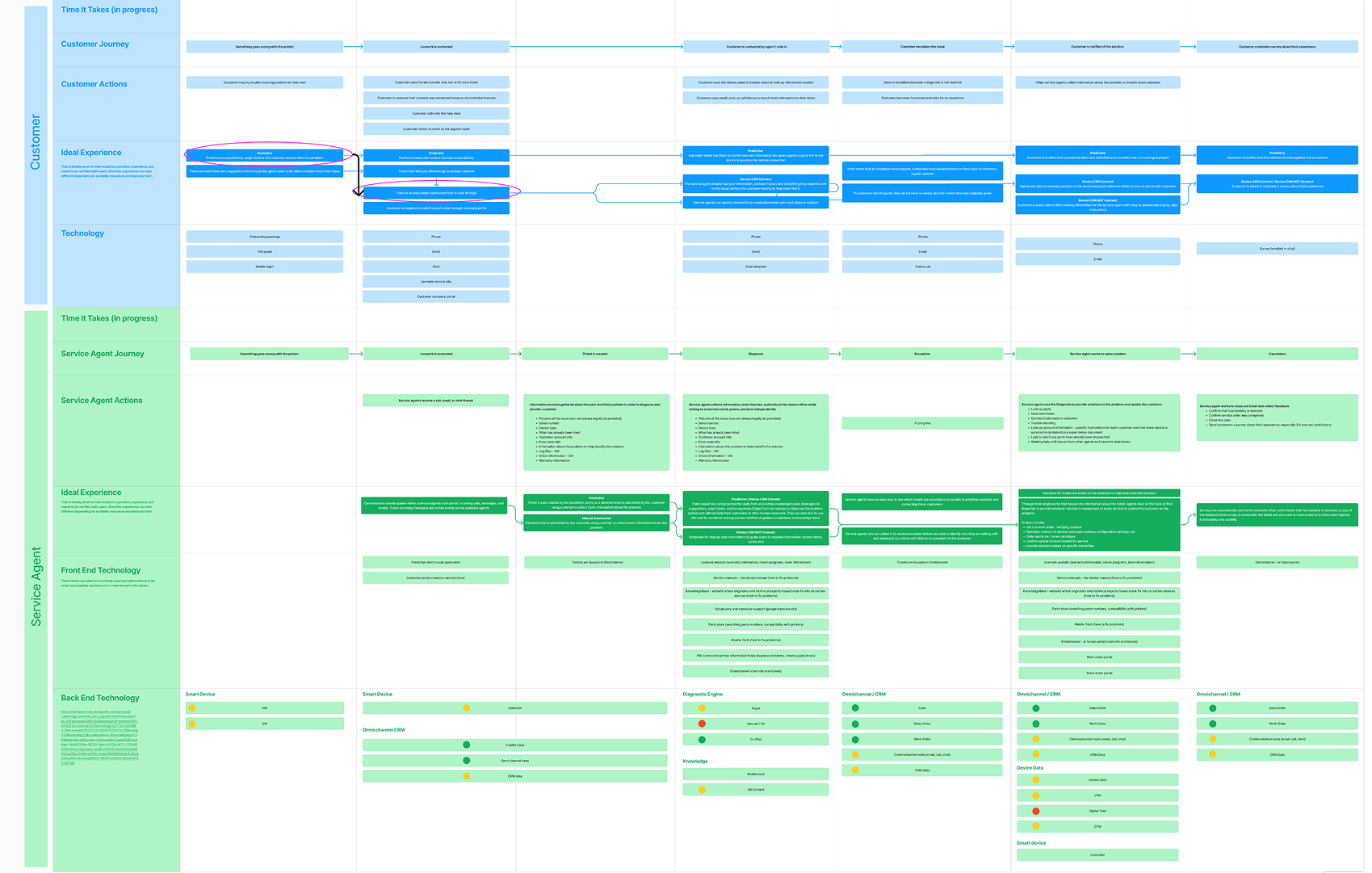
  1. Journey Mapping - Shadowing and interviews
    • Watched 15 recording of real agent / customer service calls

I spent time "in the trenches" with agents to witness the friction of trying to gather device data and customer information, with frustrated and largely unhelpful customers. During a single ticket, agents were moving between as many as 8 different slow and cluttered tools, increasing the call time by several minutes.

  1. Feature Prioritization
    • 24 stakeholders / service agent expert interviews

We identified 54 high-value features. I categorized these into "Remote Actions" (doing) and "Data Points" (knowing) to help prioritize the build.

  1. Audit Agent Tools

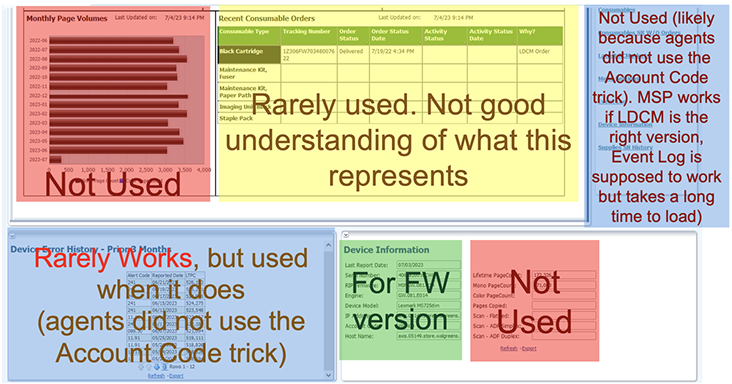
The previous tools meant to provide device information are cluttered, slow and not using real time data which can lead to increased call time and frustrated customers.

Customer / Agent Journey Map

Customer / Agent Journey Map

Previous Tool Feature Evaluation

Previous Tool Feature Evaluation

Take Aways

Complexity Requires Empathy

You can't design for support agents from an ivory tower. You have to hear the service calls first hand to understand why slow or missing data is a key frustration for the agents and the customers.

Cognitive Load Optimization

Service agents need a tool that is everything they need and nothing that they don't. Clutter just increases the cognitive load, and call times.

Overcoming the Adoption Gap

Stakeholders feared a repeat of past projects where low agent adoption led to poor ROI. To move this project forward, I would need to address this fear directly.

Solutions

Early Concepts

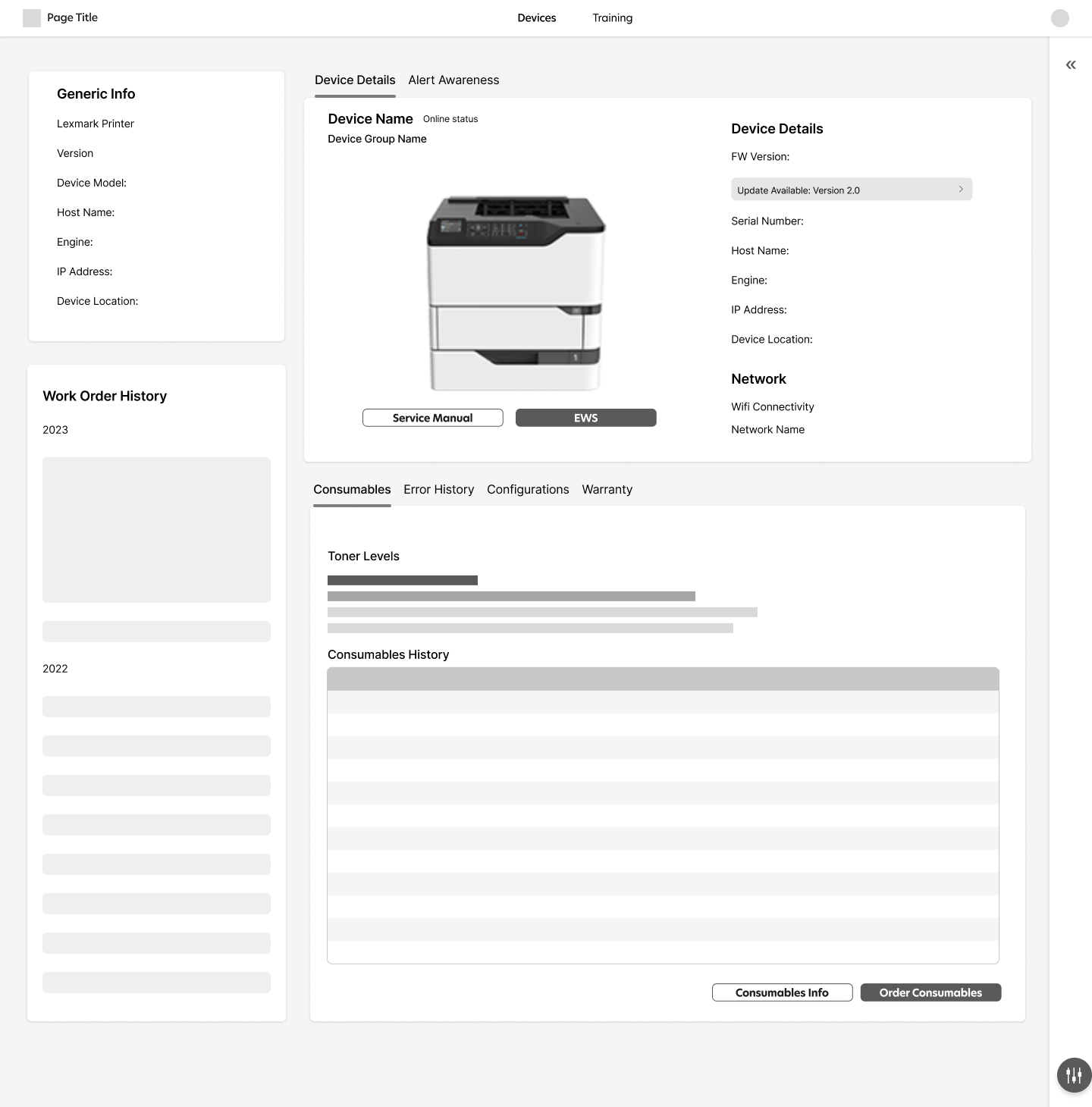
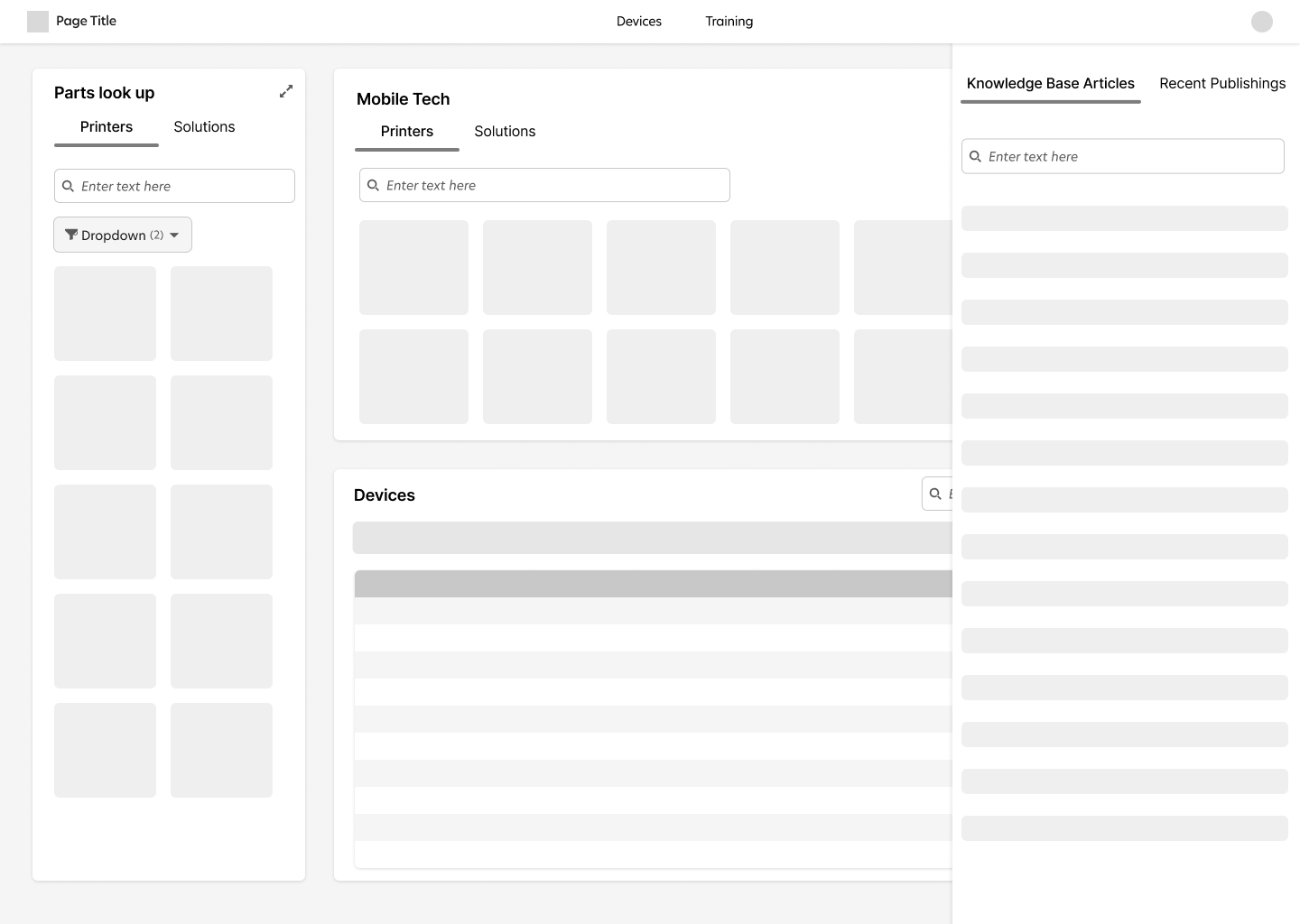
Early concepts focused on "The Super-Tool"—combining every possible data source. However, collaborating with engineering revealed technical constraints. I pivoted to a tiered roadmap: focusing first on real-time accuracy and "Top 3" remote actions, while keeping the more complex AI-driven features as future-phase goals.

Low fidelity mockup - early concept 1 Low fidelity mockup - early concept 2

First Concepts - Lo-fi Mockups

High fidelity prototype for user validation

High Fidelity prototype used for user validation Interviews

User validation survey & interviews

I conducted a validation study with 20 agents. The results were overwhelming:

Current Design Phase

Helpfulness of the dashboard

  • 76% of participants rated this tool as very helpful

Adoption

  • 79% of users are very likely to adopt the tool based on the presented design

Incorporation of AI in the future

67% of the agents felt that the addition of AI would have a positive impact.

High value AI features:

  • Consolidate device insights and data
  • Help double check their work
  • Suggesting solutions to device errors

How to meet their needs best

Speed

  • Data populating the tool
  • Access to information

High Value Information (survey)

  • 8 information driven data points
  • Top 3 remote actions

The Result

The final designs

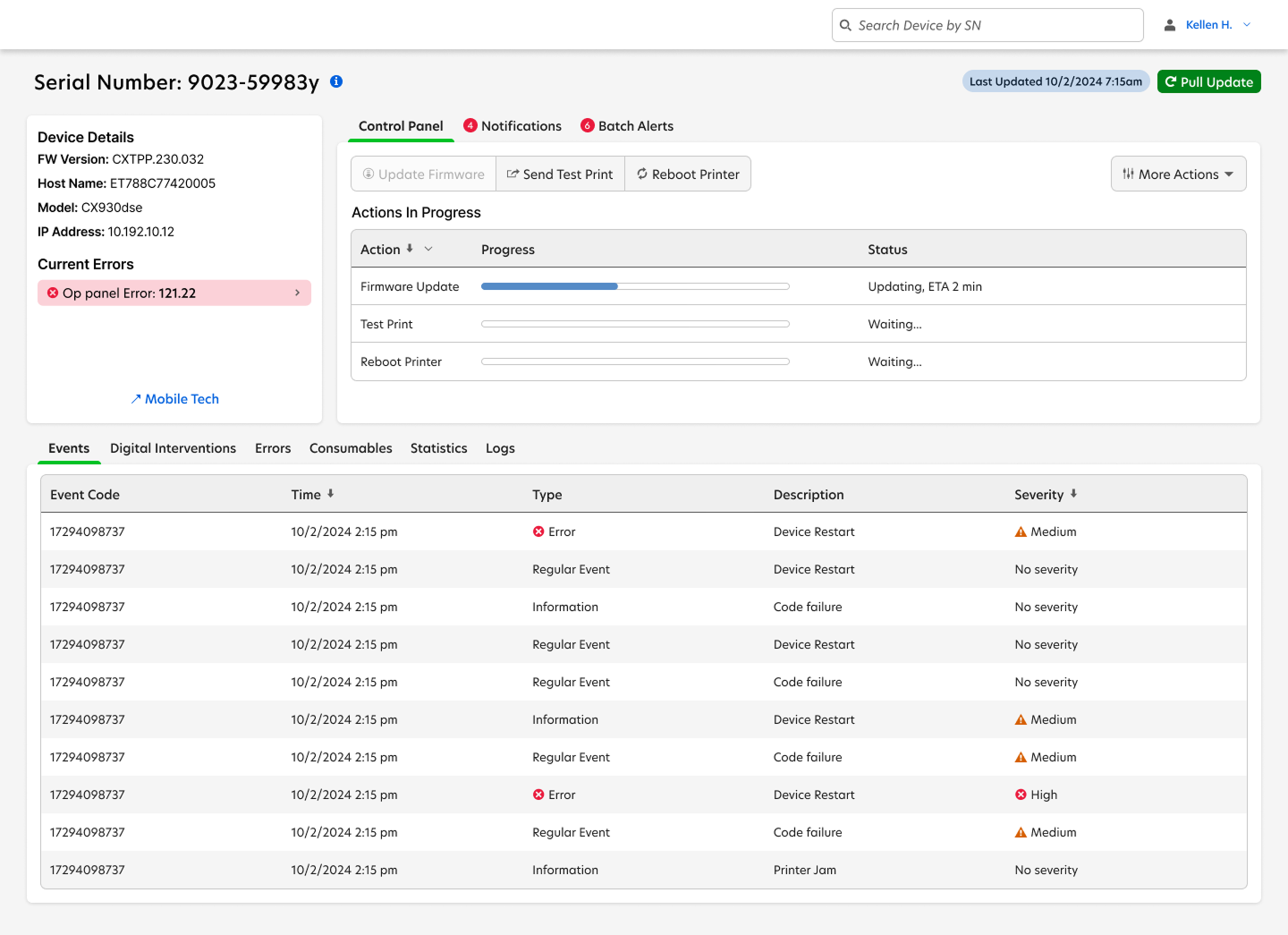
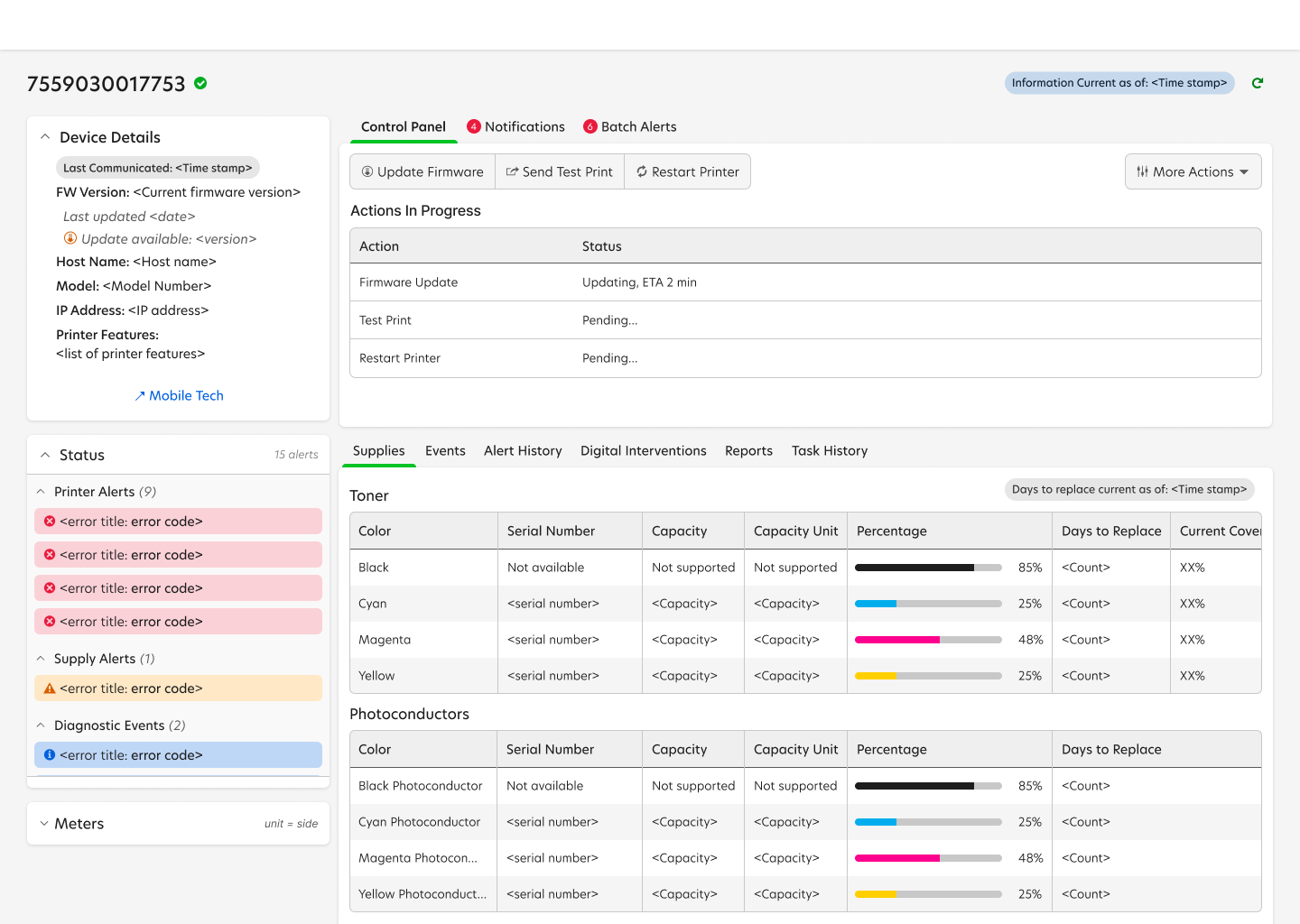
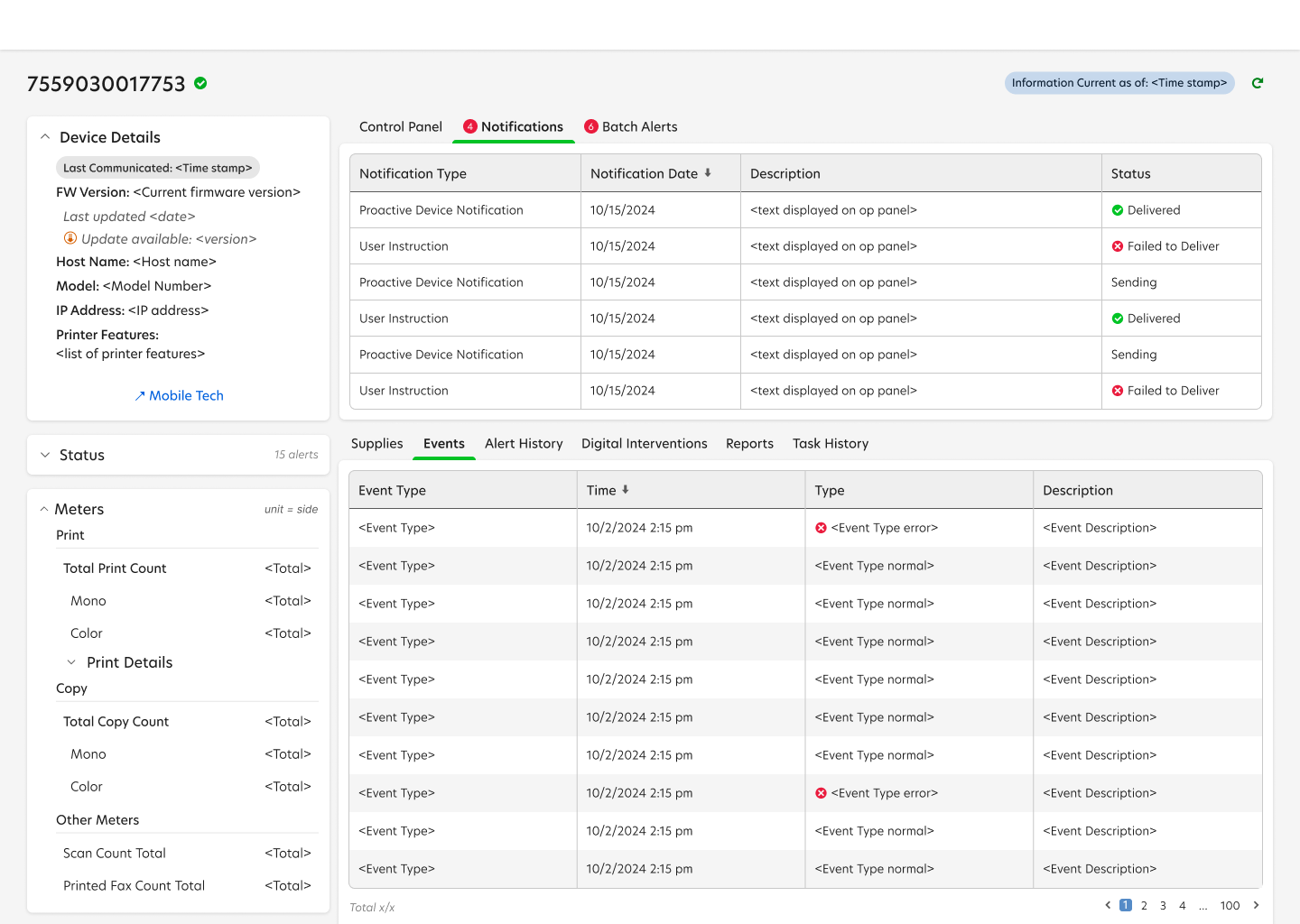
Post-testing refinements focused on optimizing information hierarchy and using purposeful color to drive user action and clarify error handling.

Final Device Support Tool design Final Device Support Tool design - alternate view

Impact

For Agents: We optimized agent efficiency by aligning real-time device data with specific troubleshooting workflows. With this architectural foundation in place, the next evolution of the tool will integrate AI to transform raw data into high-value recommendations and strategic insights.

For Customers: Decreased and in some instances eliminates the need to interface with a customers in order to resolve printer errors.

For the Business: Beyond the $10M savings, this project birthed a secondary initiative to standardize our Cloud Fleet offerings, eliminating code duplication across the company.

What I learned

Trust the Data

When there are many teams, people, and motivations involved in a project it can be very easy to get overwhelmed with opinions and ideas. My research acted as a shield for the user. When stakeholders wanted to add "clutter" features, I used the agent shadowing data to prove that "more" actually meant "slower."

Research is a Sales Tool

This project required a massive backend investment. By showing leadership the high validation scores and the "79% adoption rate" before we wrote a line of code, I secured the budget and resources needed to bring DST to life.

The End

Close Next Project